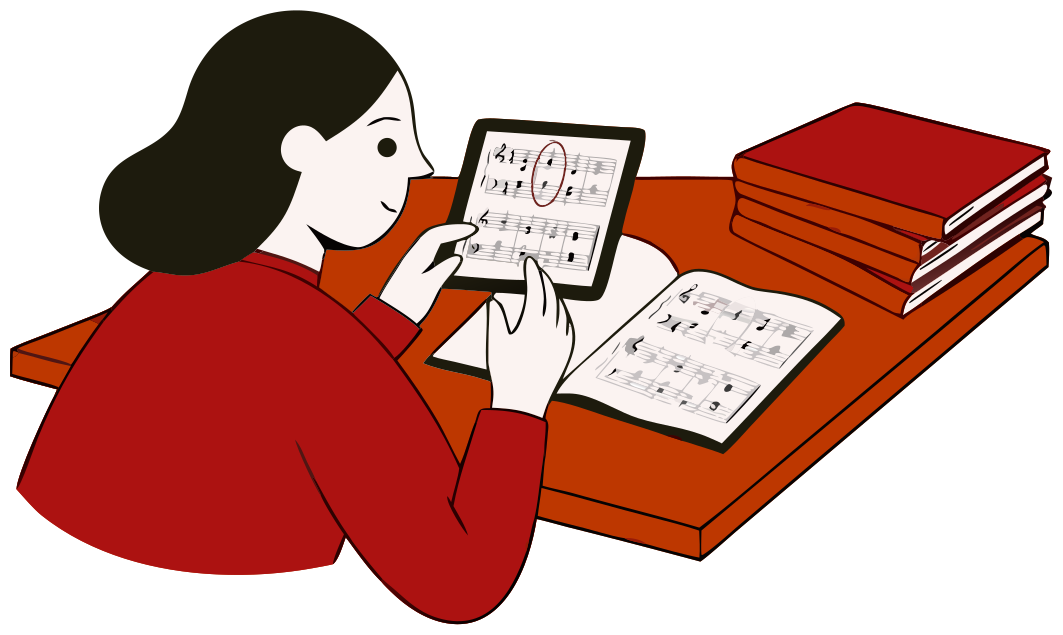
Music software has long handled clean, computer-generated print with ease. Show it pencil, a crooked stave and a smudged notehead, though, and it gives up, dismissing it all as a defect. Traditional algorithms need perfect typographic spacing, and human handwriting breaks every rule of geometry.
Win back hundreds of hours.
Our goal
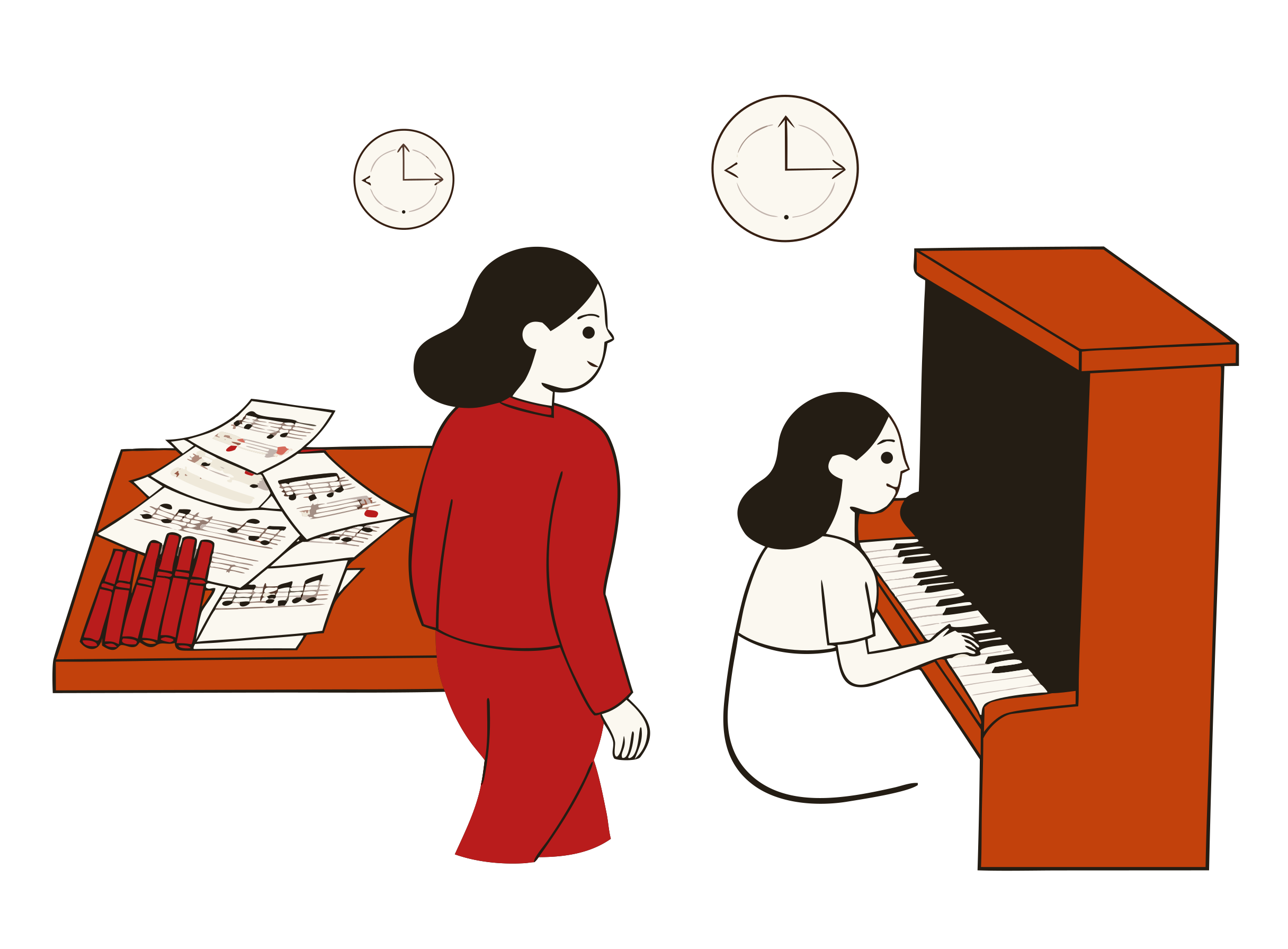
Harmony teachers at music schools spend hundreds of hours a year on the tedious marking of handwritten work. We want to build a tool that does this mechanical work for them, lifting the burden of typing notes into music editors. Instead of wasting time deciphering graphite, teachers will be free to focus on the creative work with their students.
How it works
From a crumpled page to MusicXML.
01
An ordinary photo.
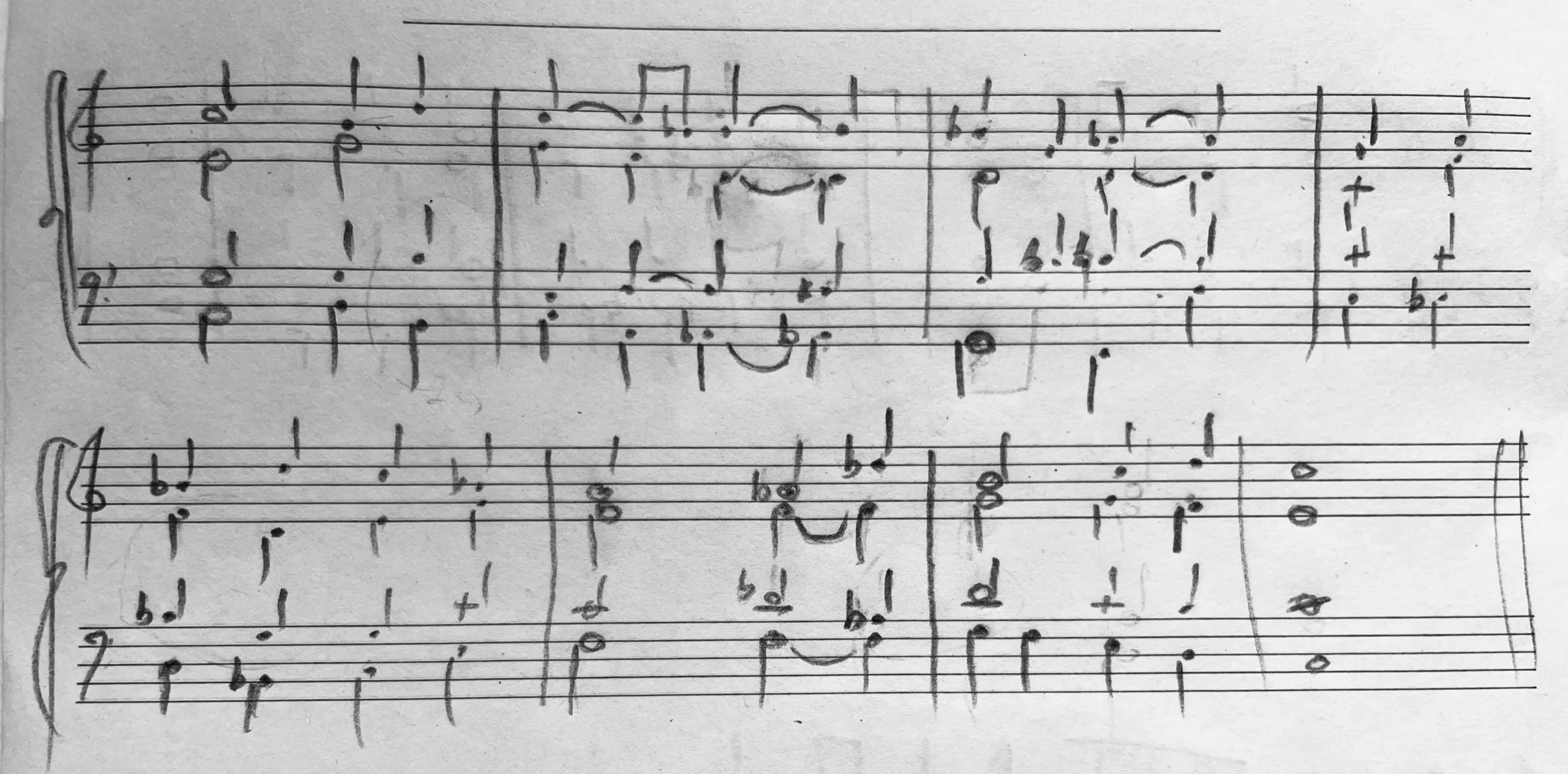
You don’t need a scanner. An ordinary phone photo is enough. Our system straightens the perspective and isolates the pencil marks on its own.
Input · a phone photo
02
Object classification with a CNN.
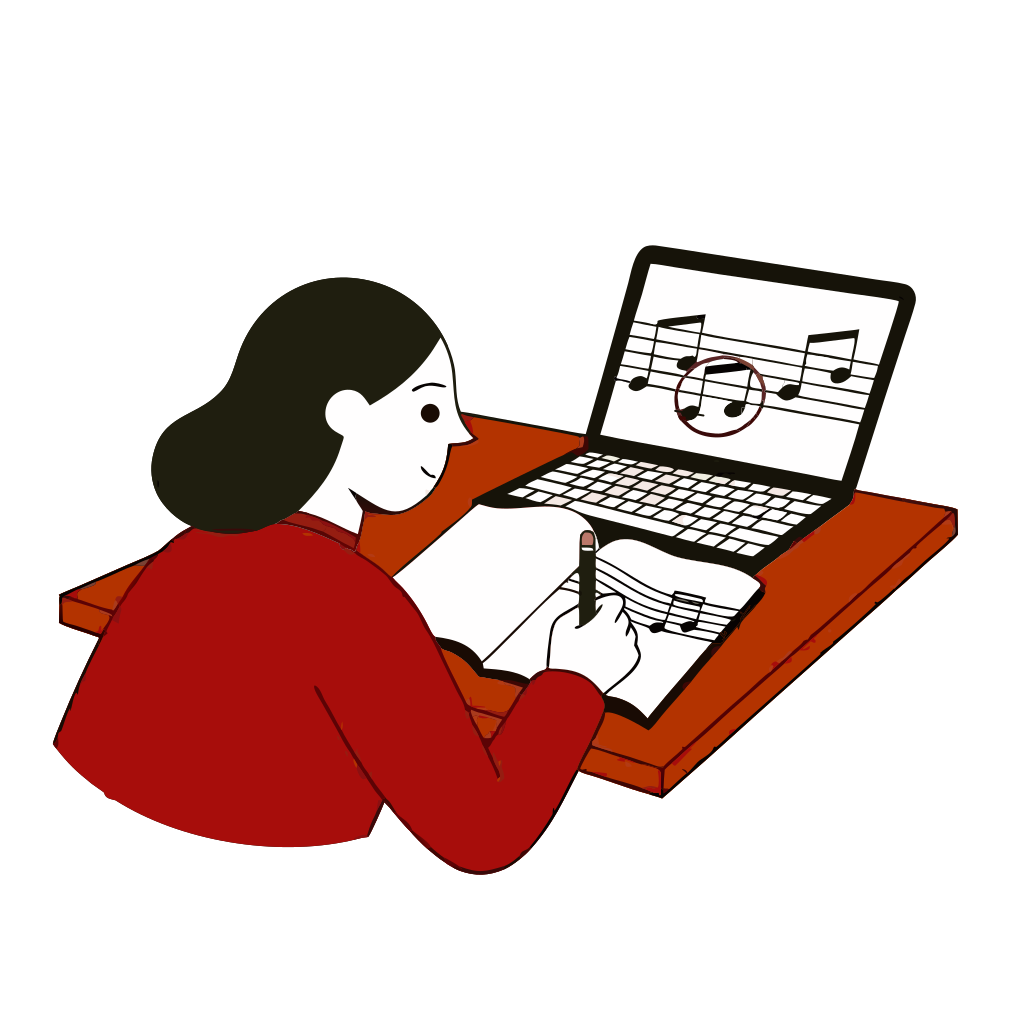
We train deep convolutional networks to recognise every note, clef and crooked stem separately, even where the pencil marks overlap.
Detection · object classification
03
A digital score and a smart assistant.
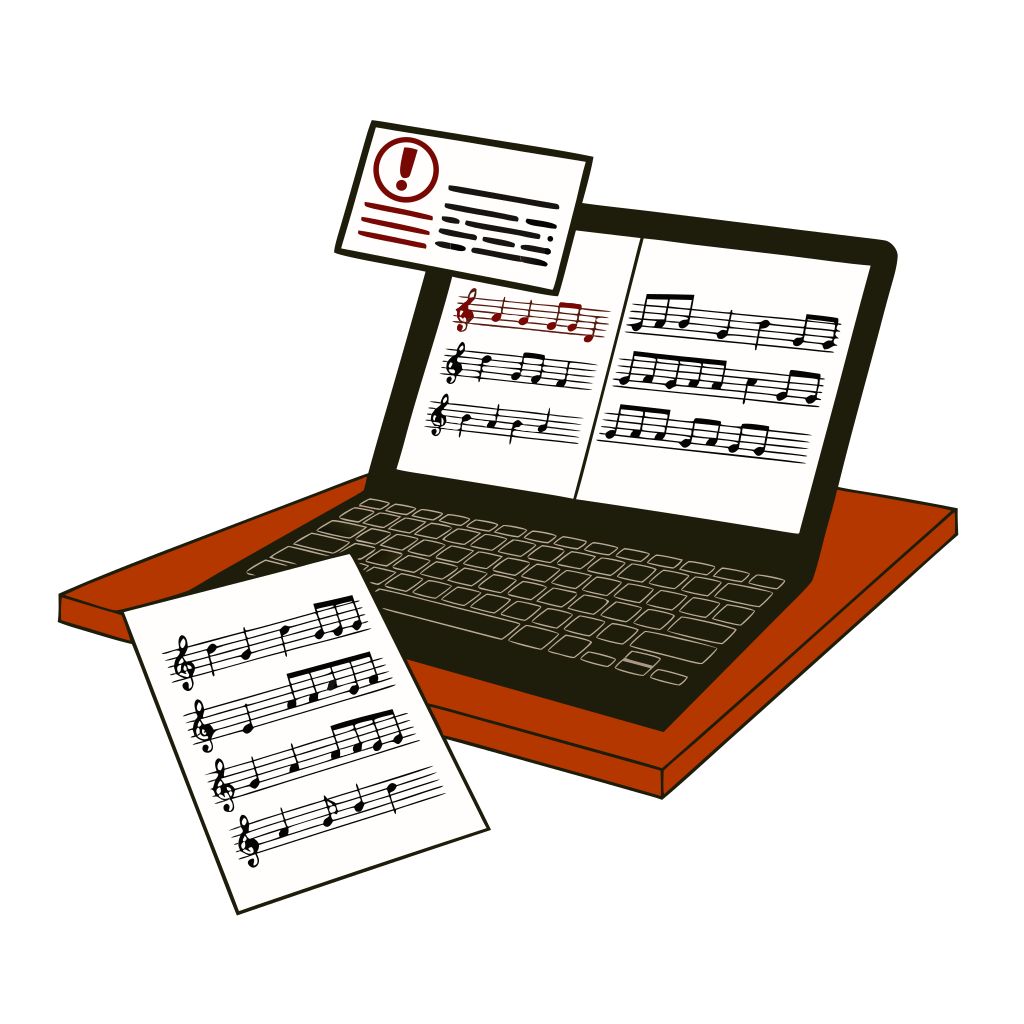
The individual symbols are assembled into a logical structure by the rules of music notation grammar. The system then transcodes them losslessly into a digital format and runs them through algorithms that check them against classical counterpoint.
Output · digital score and checkDoubled thirdDoubled thirdParallel fifthsAugmented secondTritone leap
Proof of concept
We start with harmony exercises.
Why harmony? Four-part vocal writing is an ideal, closed environment for artificial intelligence. A known key, metre and exactly four voices drastically narrow the room for error. This is the foundation we’re building on, our proof of concept, before scaling the model to more complex, freer compositional forms. Right now we’re collecting training data – every harmony notebook you give us is a step towards a better algorithm!
Would you like to help us build Copyisto?
Are you a teacher or a student with old harmony notebooks in a cupboard? Get in touch!
The notebooks you give us earn you credits to use in the tool. The more you give, the more you get. How it works
Give your harmony notebook a second lifeFor the next month we’re collecting notebooks in Wrocław. In return, you get free early access – for 12 months or more from the tool’s launch!
Pianist and composer, a graduate in composition from the Academy of Music in Wrocław, now studying mathematics. A software engineer at DIVEINAI since 2019, responsible for the architecture and upkeep of its production platform. Builds technology for live music, including Agogica.app, which keeps musicians in sync during a concert.
Wrote a first app for checking harmony exercises as a computer science engineering thesis at the University of Wrocław. A professional programmer since 2017, at software houses and start-ups, from the interface to the cloud. Studies composition at the Academy of Music in Wrocław and performs original works at the piano and with live electronics.
We’re two engineers and musicians who set out to solve a problem that the biggest commercial music programs have been tripping over for years.
Cookies
We’d like to know how you use the site, so we can improve it. With your consent, we’ll use analytics cookies for that. You’ll find the details in our privacy policy (in Polish).